
Meet the FABLE Pakistan team
The team is led by the Centre for Water Informatics & Technology (WIT), Lahore University of Management Science (LUMS), and the Global Climate-Change Impact Studies Centre (GCISC). The team combines interdisciplinary expertise in socio-hydrological systems, food-water-energy nexus, AI and data-driven environmental analysis, precision agriculture, and policy-relevant sustainability assessment.
Model used by the team: FABLE Calculator.
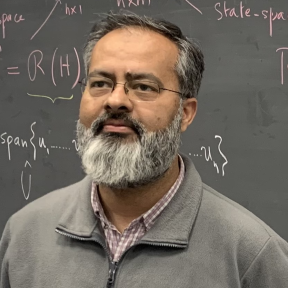
Dr. Muhammad Abubakr
Director, WIT-LUMS
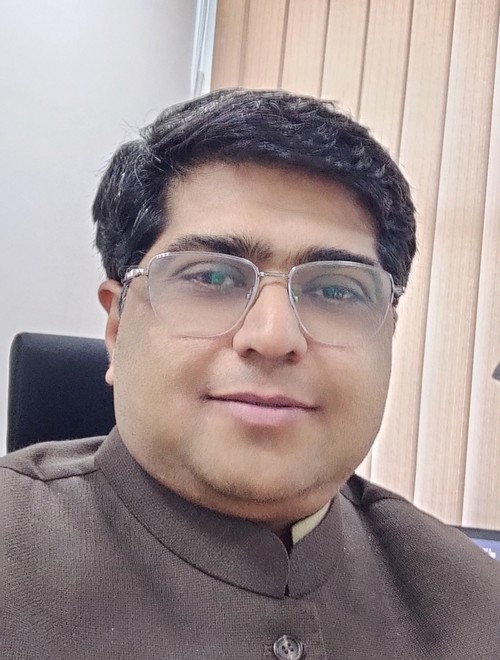
Mr. Muhammad Arif Goheer
Executive Director, GCISC
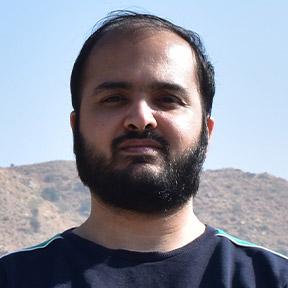
Dr. Talha Manzoor
Assistant Professor (Research), WIT-LUMS

Dr. Muhammad Awais
Assistant Professor (Research), WIT-LUMS
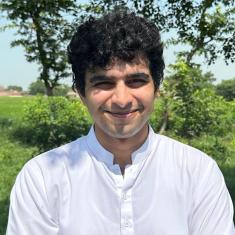
Ahmed Saeed
Research Assistant, WIT-LUMS

Syeda Baseerat Fatima
Research Assistant, WIT-LUMS
Transforming food and land-use systems in Pakistan
Pakistan faces profound challenges in its food and land systems, deeply interconnected with socio-economic, environmental, and governance factors. Despite the global commitments under the 2030 Agenda for Sustainable Development and the Paris Agreement, Pakistan’s transition to sustainable food and land-use systems remains slow and fraught with complexities.
The country’s rapidly growing population exerts immense pressure on agricultural resources. Food demand is rising, yet the degradation of arable land due to over-cultivation, deforestation, and salinization continues unchecked. Meanwhile, water scarcity, one of the most acute globally, threatens agricultural sustainability as inefficient irrigation and over-reliance on groundwater to deplete critical resources. Climate change further destabilizes the system, with erratic weather patterns, rising temperatures, and extreme events such as floods and droughts reducing yields of staple crops like wheat, rice, and cotton. These shifts jeopardize food security, deepen rural poverty, and hinder progress toward environmental integrity.
Key national objectives and targets
- Nationally Determined Contribution (NDC): In its updated NDC, Pakistan has committed to reducing projected greenhouse gas emissions by up to 50% by 2035, compared to business-as-usual levels, subject to international financial and technical support.
- National Adaptation Plan (NAP): Through its National Adaptation Plan framework, Pakistan aims to strengthen climate resilience across priority sectors including agriculture, water resources, food security, and ecosystems, with a focus on climate-resilient farming, improved water management, and disaster risk reduction.
- Biodiversity and Land Restoration: Pakistan has committed to restoring
- Renewable Energy Transition: Pakistan aims to increase the share of renewable energy to 60% of total power generation by 2030, reducing reliance on fossil fuels and lowering emissions across energy, land-use, and food systems.
- Loss and Waste Reduction: In line with the United Nations Sustainable Development Goals (SDG 12.3), Pakistan is committed to halving per capita food loss and waste by 2030, contributing to improved food security and resource efficiency.
Research interests in food and land-use
Our research focuses on advancing sustainable food and land-use systems through the FABLE modelling framework. We are particularly interested in exploring:
- Role of agricultural smart technologies in food system transformation: Leveraging digital Internet of Things (IOT), precision agriculture, and real-time monitoring to enhance productivity, resource efficiency, and resilience across food systems, we are interested in exploring the uptake of these and its impact on the food system transition.
- Water and Energy linkages with agriculture: Examining the complex nexus interactions between land, water, energy, and food to support evidence-based policies, scenario planning, and sustainable development pathways.
Policy engagement
Our team actively engages with government agencies, research institutions, and local stakeholders to translate the results of our analysis into actionable policy recommendations. For example, through workshops and interactive sessions, we shared insights from FABLE-based modelling of food and land-use systems, highlighting the impact of irrigation strategies, land-use planning, and smart agricultural technologies. These engagements facilitated evidence-based discussions on sustainable resource management, informed regional development plans, and supported the design of policies to enhance food security and climate resilience in Pakistan.
Publications
- Wescoat, J.L. Jr., Koshul, B., Muhammad, A. (2025). Principled pragmatism in water resources research: An historical and philosophical perspective on studies in South Asia and beyond. https://doi.org/10.1029/2025WR040155
- Hassan, W., Manzoor, T., Muhammad, A. (2024). Socio-hydrological Performance Assessment of Water Allocation in Large-Scale Irrigation Systems.
- Ahmad, M., Rafique, H., Muhammad, A. (2024). Exploring the application of machine learning for soil moisture forecasting over in-situ soil moisture sensors network. https://doi.org/10.1109/HITE63532.2024.10777226
- Hassan, W., Manzoor, T., Muhammad, A. (2024). The limits to equity in water allocation under scarcity. https://doi.org/10.1016/j.jhydrol.2024.131631
- Rafique, H., Zainab, R., Ahmad, Z., Muhammad, A. (2024). A quality assured in-situ real-time soil moisture monitoring network for the Indus Basin. https://doi.org/10.1109/IGARSS53475.2024.10642900
- Muhammad, A., Wescoat, J.L. Jr. (2023). Developing knowledge capacity and wisdom for water resource management and service delivery. https://doi.org/10.1007/978-3-031-36131-9_15
- Hassan, W., Manzoor, T., Muhammad, A. (2023). Improving equity in demand-driven irrigation systems through a rights-preserving water allocation mechanism. https://doi.org/10.1016/j.agwat.2023.108443
- Sohail, M., Nazir, U., Ahmad, J., Muhammad, A., et al. (2023). Analyzing the knock-on impacts of 2022 floods on Rabi 2023 using remote sensing and field surveys. Full text
- Sohail, M., Muhammad, A. (2023). Assessment of the 2022 flood disaster in Pakistan's Lower Indus Plain using SAR and optical remote sensing. https://doi.org/10.1109/IGARSS52108.2023.10283146
- Farooq, M., Muhammad, A., Manzoor, T. (2022). Climate informatics for the water-energy-food nexus in the Indus Basin: Modeling dairy farms.
- Ilyas, A., Parkinson, S., Vinca, A., et al., Muhammad, A. (2022). Balancing smart irrigation and hydropower investments for sustainable water conservation in the Indus Basin. https://doi.org/10.1016/j.envsci.2022.04.012
- Sohail, M., Ahammad, Z., Muhammad, A. (2022). Catchment-level seasonal snow-depth mapping and monitoring in the Upper Indus Basin. https://doi.org/10.1109/IGARSS46834.2022.9884539
- Ayaz, M.A., Manzoor, T., Muhammad, A. (2020). MPC based soil moisture regulation of a canal-connected crop field. https://doi.org/10.1016/j.ifacol.2021.04.095
- Vinca, A., Awais, M., Byers, E., Krey, V., Riahi, K. (2025). Sectoral investments to achieve water, energy and land SDG under climate change uncertainty. https://doi.org/10.1088/2634-4505/adc0bc
- Awais, M., Vinca, A., Byers, E., Andrijevic, M., Harmsen, M., Niazi, H., et al. (2024). Global water basins under combined climate mitigation, adaptation, and sustainable development targets. https://doi.org/10.5194/gmd-17-2447-2024
- Awais, M., Vinca, A., Byers, E., Frank, S., Fricko, O., Boere, E., Burek, P., et al. (2024). MESSAGEix-GLOBIOM nexus module: Integrating water sector and climate impacts. https://doi.org/10.5194/gmd-17-2447-2024
- Schmidt Tagomori, I., Harmsen, M., Awais, M., Byers, E., Daioglou, V., et al. (2024). Climate policy and the SDGs agenda: how does near-term action on nexus SDGs influence the achievement of long-term climate goals? https://doi.org/10.1088/1748-9326/ad3973
- Vinca, A., Falchetta, G., Ireland, G., Tuninetti, M., Awais, M., Byers, E., Semeria, F., et al. (2023). The benefits of rural electrification to improve water access and irrigation in Sub-Saharan Africa, a water-energy-land assessment framework applied to Zambia. https://doi.org/10.5194/egusphere-egu23-16277
Recent activities
- Nexus Summit: Engagement in discussions on integrated water-energy-food systems, sustainability transitions, and cross-sectoral policy challenges.
- LUMS and GCISC signed an MoU to collaborate on FABLE and other integrated modelling activities for Pakistan.