Authors: Ankit Saha (IIMA), Vartika Singh (IFPRI), Ranjan Kumar Ghosh (IIMA). The authors acknowledge support from the IKI 2050 is Now project as well as the CGIAR Science Program on Climate Action for this event.
The Potential to Unlock a Net Zero Future
When we talk about cutting carbon emissions in India, attention typically focuses on factories, power plants, and transportation. This is understandable, as the energy sector is the country’s largest contributor to greenhouse gas emissions. By comparison, agriculture, food systems, and land use account for a smaller share at 14% of total emissions, leading climate strategies to prioritize energy and industry, where mitigation potential is perceived to be greatest.
But this focus misses something crucial. Unlike smokestacks and tailpipes, which function only as carbon emitters, farms and forests play an important role in removing carbon from the atmosphere. This dual role, as both emitter and absorber, makes the agriculture, forestry and land use (AFOLU) sector uniquely important in India's climate journey. In 2020, India's AFOLU sector emitted 334 million metric tons of CO2 equivalent. That same year, the country's croplands and forests absorbed carbon equivalent to 22% of India's total CO2 emissions.
The potential to expand this natural solution is enormous. By restoring degraded lands and increasing forest and tree cover, India could create an additional carbon sink capable of absorbing 2.5 to 3 billion metric tons of CO2 equivalent by 2030. That's roughly equivalent to taking hundreds of millions of cars off the road. This is why agriculture isn't just another sector to manage in India's climate strategy; it is a cornerstone of the solution. The transition to low-carbon development doesn't just run through our cities and industries; it runs through our fields and forests too.
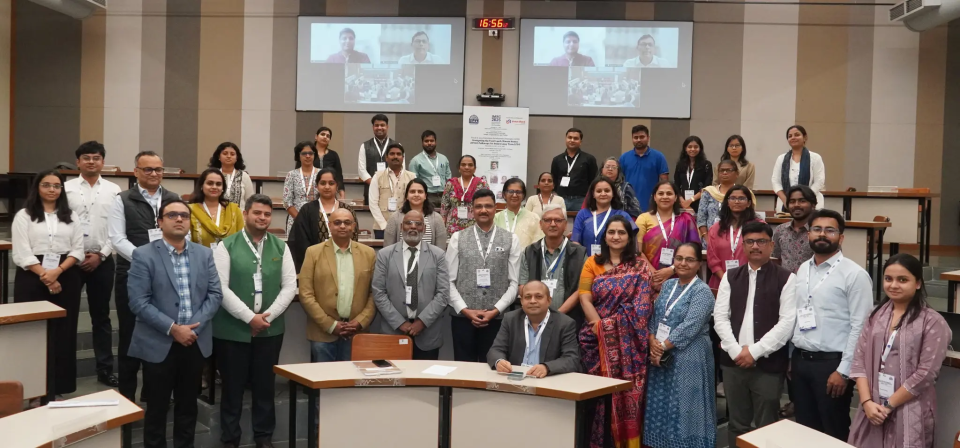
To discuss these opportunities, a large group of academicians, practitioners, policymakers, civil society and students, gathered at the Indian Institute of Management Ahmedabad (IIMA) on December 6 for two curated sessions. The event was co-organized by IIMA, International Food Policy Research institute (IFPRI) and the International Rice Research Institute (IRRI), under the umbrella of the India Management Research Conference. The first session focused on a collaborative “Serious Game”, followed by a panel session titled From Trade-offs to Synergies: Advancing AFOLU's Role in India's Low-Emission Future.
Let's Play a Game
The Serious Game was conducted as a collaborative exercise to actively engage participants with the trade-offs and synergies embedded in climate decision-making. The game has previously been conducted in this format within the FABLE Consortium and in France. This exercise placed participants in the role of decision-makers navigating India’s food-land-climate futures, where researchers, policymakers, practitioners, and students could move beyond theory and engage with the consequences of policy choices in a simulated yet realistic setting.
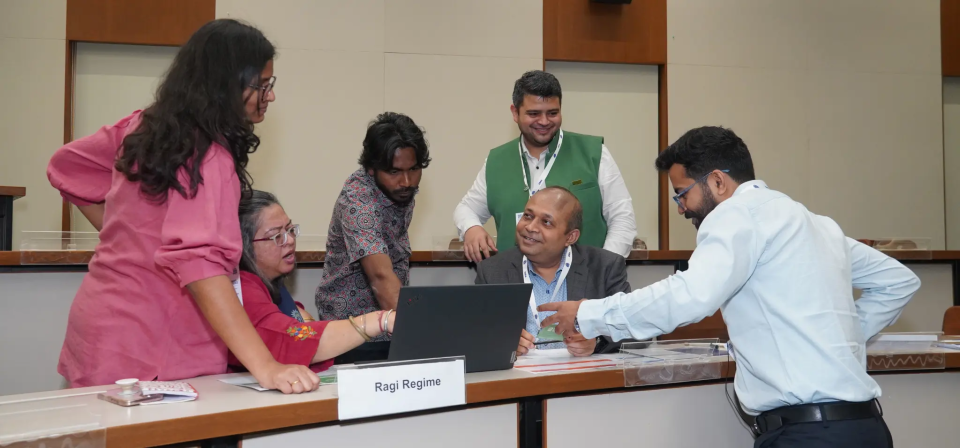
The game simulates real-world dynamics by asking participants to design policy pathways from 2025 to 2050 using a simplified version of India’s FABLE Calculator, which is adapted from the standard calculator developed by the FABLE Consortium. Teams play as a cabinet, with each player representing a different ministry. Every decision requires spending limited political points, mirroring real governance constraints such as political capital, budget limits, and competing priorities.
As population grows, diets shift, ecosystems shrink, and climate pressures intensify, participants must balance four interlinked outcomes: food and nutrition security, greenhouse gas emissions, biodiversity protection, and agricultural trade. Shock cards and exogenous scenarios further reflect the uncertainty and external pressures that policymakers routinely face. The game makes these trade-offs visible in real time, turning data into lived experience.
Participants experienced firsthand how deeply interconnected the AFOLU systems were with other parts of the economy and how prioritizing one outcome often triggered unintended consequences elsewhere. For instance, pushing food production could strain biodiversity or emissions targets, while aggressive mitigation efforts could affect nutrition or trade. At the same time, the game demonstrated meaningful synergies when decisions were coordinated across sectors, compared to when they were pursued in isolation. The exercise demonstrated why siloed interventions fall short, and why coordinated action across ministries (agriculture, environment, health, and trade, in this case) is essential for credible and scalable low-emission development pathways.
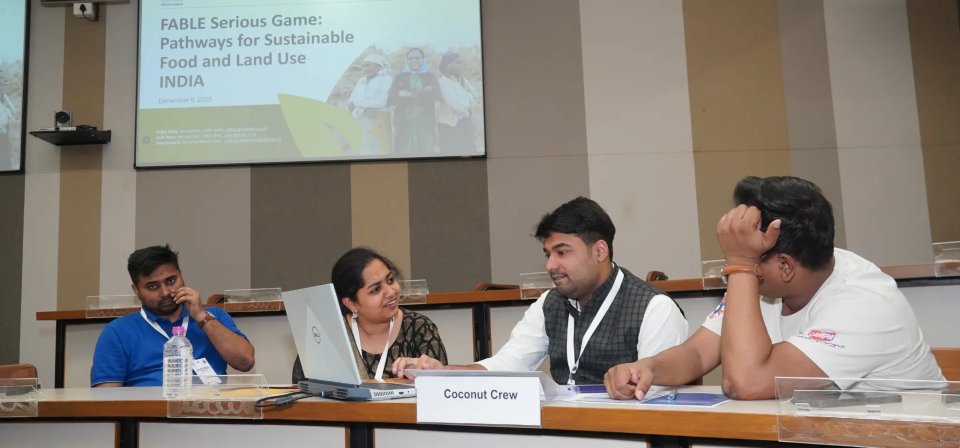
The experiment reinforced three core lessons: there are no silver bullets in climate action; synergies emerge only when sectors work together rather than optimize in isolation; and India’s food-land-climate future will depend not on maximizing a single outcome, but on recognizing how every outcome is interconnected.
Beyond these learning outcomes, the session also fostered dialogue and humility, bringing together participants from academia, policy, civil society, and practice who, despite differing priorities, confronted the same systemic constraints. This shared experience highlighted the value of serious games not just as analytical tools, but as platforms for empathy, collaboration, and informed debate, reminding us that in an era of urgent climate choices, shared understanding is as critical as technical solutions.
From Game to Policy: Charting the Path to Meet Climate Mitigation and Farmer Welfare Goals
Shortly after the session, a high-level panel focusing on key examples from Indian states brought together leading voices from policy, research, grassroots organizations, and the private sector. Amongst larger issues, the panel deliberated on a key question: How can India meet its climate goals while feeding its people and protecting farmer livelihoods? This question anchored a rich discussion, with aligned perspectives from practitioners and policymakers working across India's agricultural landscape.
The conversation began with a high-level presentation by Dr. Arabinda Padhee, Principal Secretary of the Department of Agriculture and Farmer’s Welfare, Government of Odisha. Drawing on years of implementation at the state level, he noted that climate-smart agriculture is not an abstract ideal but a practical approach that can be improved by continuous testing and refinement. As a state subject operating within the central government's framework, agriculture in India presents an opportunity to balance national coordination with increased flexibility for states to customize programs and policies based on local contexts. Using Odisha as a living laboratory, where several policy solutions are being tested simultaneously, the discussion highlighted that political will to drive reforms remains a key steppingstone to achieving any form of change on the ground.
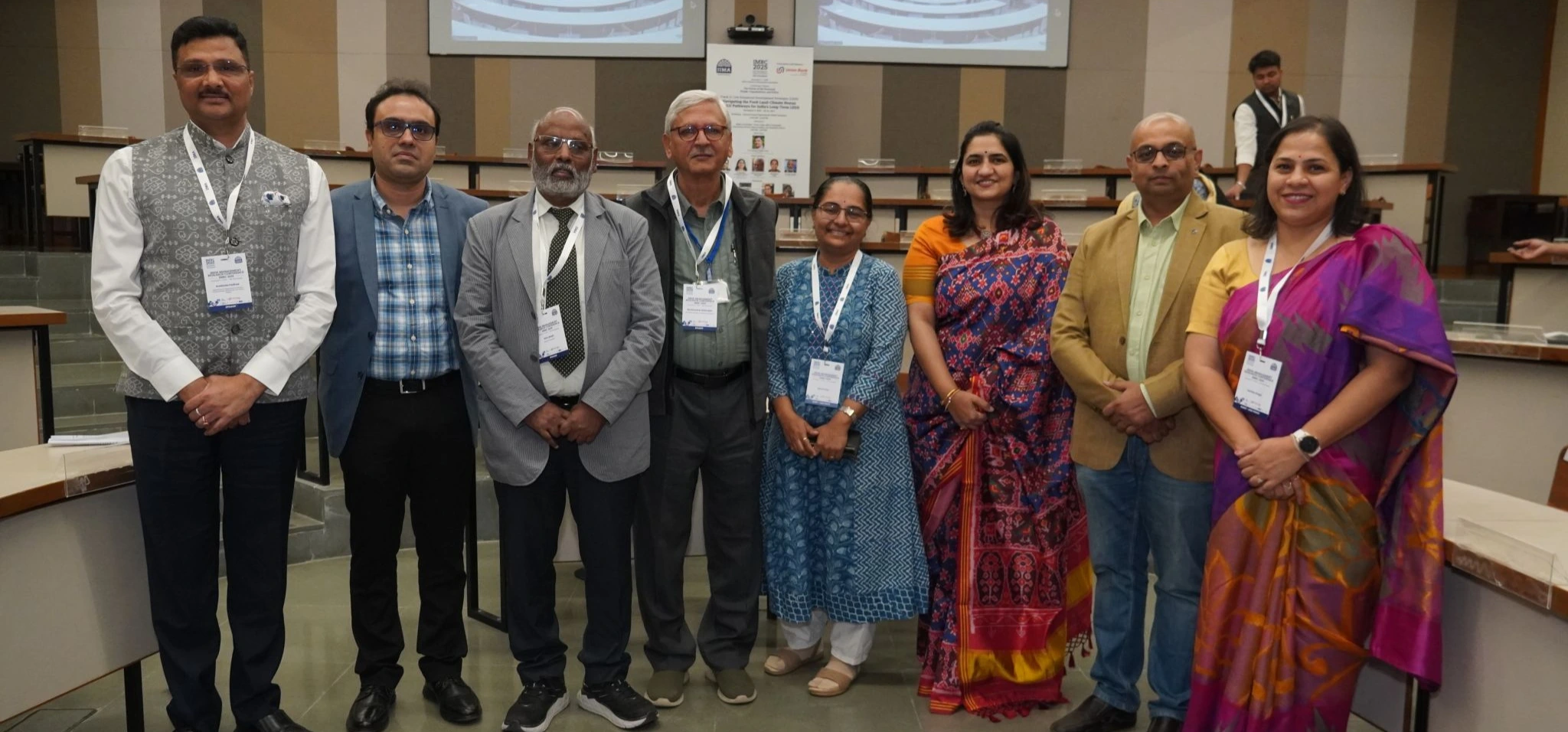
The conversation extended to other states such as Gujarat, Bihar, and Maharashtra, where examples of revealed transformation stories were shared. Panelists identified three critical pathways towards leading transformation at scale, starting from the state.
First, crop diversity matters. Dr. Arabinda Mishra from Development and Environment Futures Trust highlighted how diverse cropping systems, including millets and local rice varieties, help farmers weather climate shocks while reducing emissions. Grassroots initiatives like Poshan Jatra were making traditional foods desirable again, with focus to redirect aspirations by adolescents and youth. A CLAN approach was suggested by Dr. Radhika Hedaoo from Symbiosis International University, that brought- climate smart, livelihood smart, agricultural smart, and nutritionally sensitive agricultural systems into the mainstream discussion. Ravishankar Natrajan from FPO Market Linkages Foundation suggested reframing sustainable foods as "safe-to-consume" to broaden accessibility beyond premium markets, while moving away from the emphasis on “organic” foods that currently increase barriers to production for many farmers and limit consumption for most consumers.
Second, markets must work for farmers. Mishra advocated for "custodian farmer" models with stewardship fees and transition financing, noting that asking farmers to bear the costs of climate adaptation alone is unreasonable.
Third, women farmers are central. Mansi Shah from SEWA described how organizing women into clusters with access to finance, inputs, and markets creates both resilience and economic opportunity. This approach works best when integrated with heritage landscapes that already combine farming, biodiversity, and culture such as the Chilika Wetlands in Odisha, as outlined by Dr. Ram Boojh, CEO, Mobius Foundation.
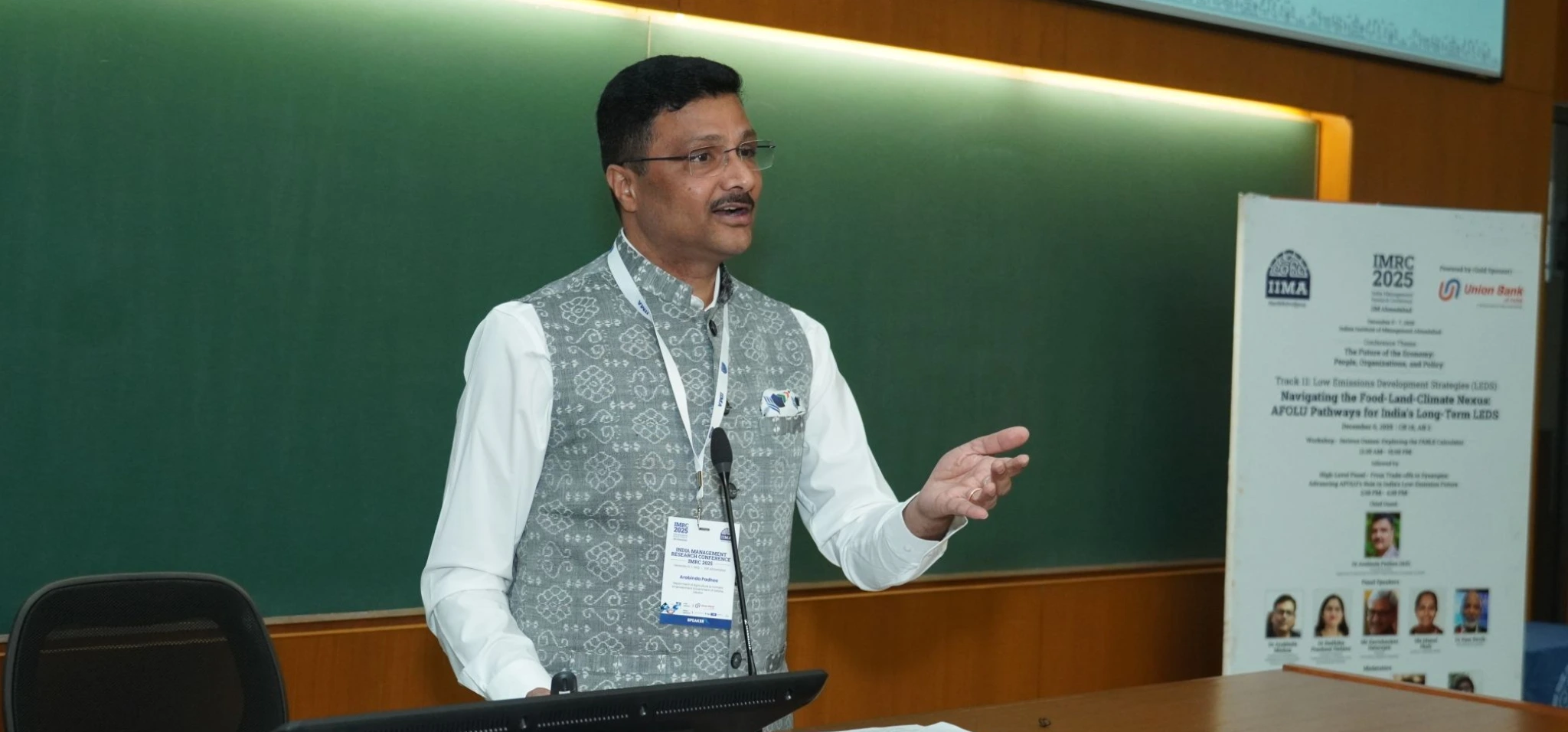
“Climate mitigation and farmers’ welfare can converge through practical and scalable interventions.” - Dr. Arabinda Padhee.
What emerged from both exercises was a recognition that India's AFOLU transformation requires simultaneous action across multiple fronts: policy frameworks that create enabling conditions, market systems that reward sustainable practices, research that illuminates synergies, grassroots organizations that ensure equity, and farmers who ultimately make daily decisions about the land and their livelihoods.
The shift from trade-offs to synergies requires intentional integration, courageous policy choices, patient investment in alternative models, and above all, centering the voices and needs of those closest to the land. India's low-emission future will be built not through grand gestures but through the accumulated choices of millions of farmers, informed by science, supported by policy, rewarded by markets, and grounded in the wisdom that sustainable agriculture is not a constraint on development, but the only viable path forward.