Author: SPARK4B+
This article was first published by SPARK4B+ and has been tailored and shared here with permission. Read the original post here.
If you could stand in your own neighbourhood thirty years from now and see the version where nature and society recovered and the version where they didn't, would you make different choices today?
SPARK4B+ is going to find this out in six countries and seven sectors (farming, forestry, water, finance, health, education and cities), from the Bogotá Highlands to German field margins, Galician commons, the Warwickshire catchment, Swedish forests and Budapest's underused parks and cemeteries. In each place, communities imagine the future they want, models show the pathways and action to get there, and future scenarios are built and tested.
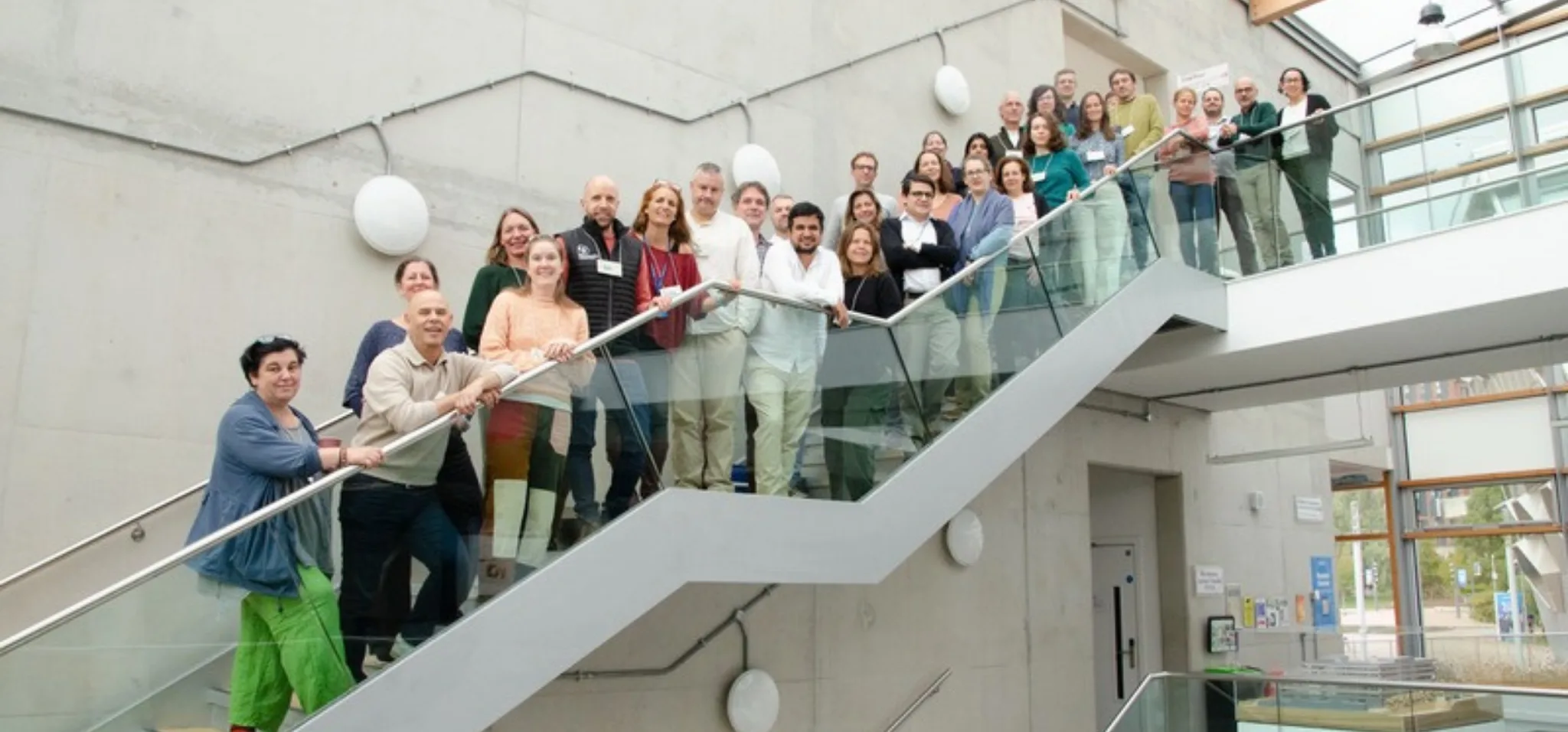
You can't build what you can't picture; that's the premise behind SPARK4B+, a Horizon Europe project launched on 1 September 2026 to turn alternatives to growth-oriented economic models into practical pathways. Backed by nearly €7 million over four years, SPARK4B+ brings together 17 partners from eight European countries and Colombia. The consortium met in Coventry on 8 September for its kick-off.
What is SPARK4B+?
SPARK4B+ (Strengthening Pathways for Alternative socio-economic paradigms and governance frameworks and Response-able Knowledge and action for Biodiversity-Positive and just futures) is funded under the European Commission's Horizon Europe programme (Call: HORIZON-CL6-2025-01-BIODIV-08).
"Biodiversity loss, climate change and inequality are not separate crises; they are symptoms of the same growth-oriented paradigm. SPARK4B+ gives us the space, the partners and the tools to make credible alternatives tangible, test them on the ground, and turn them into pathways that policymakers, businesses and communities can actually follow," said Prof. Marco van de Wiel, SPARK4B+ coordinator at Coventry University.
The project starts from the premise that societies stall because the alternatives remain unimaginable. Degrowth, the wellbeing economy, ecosystem-based governance and related practices already exist, but commonly only at small scale, in a fragmented manner, rarely institutionalised, and largely untested. SPARK4B+ sets out to establish them as both visionary and tangible: imagined with communities, tested with evidence, put to work in real places.
From Alternative Ideas to Practical Pathways
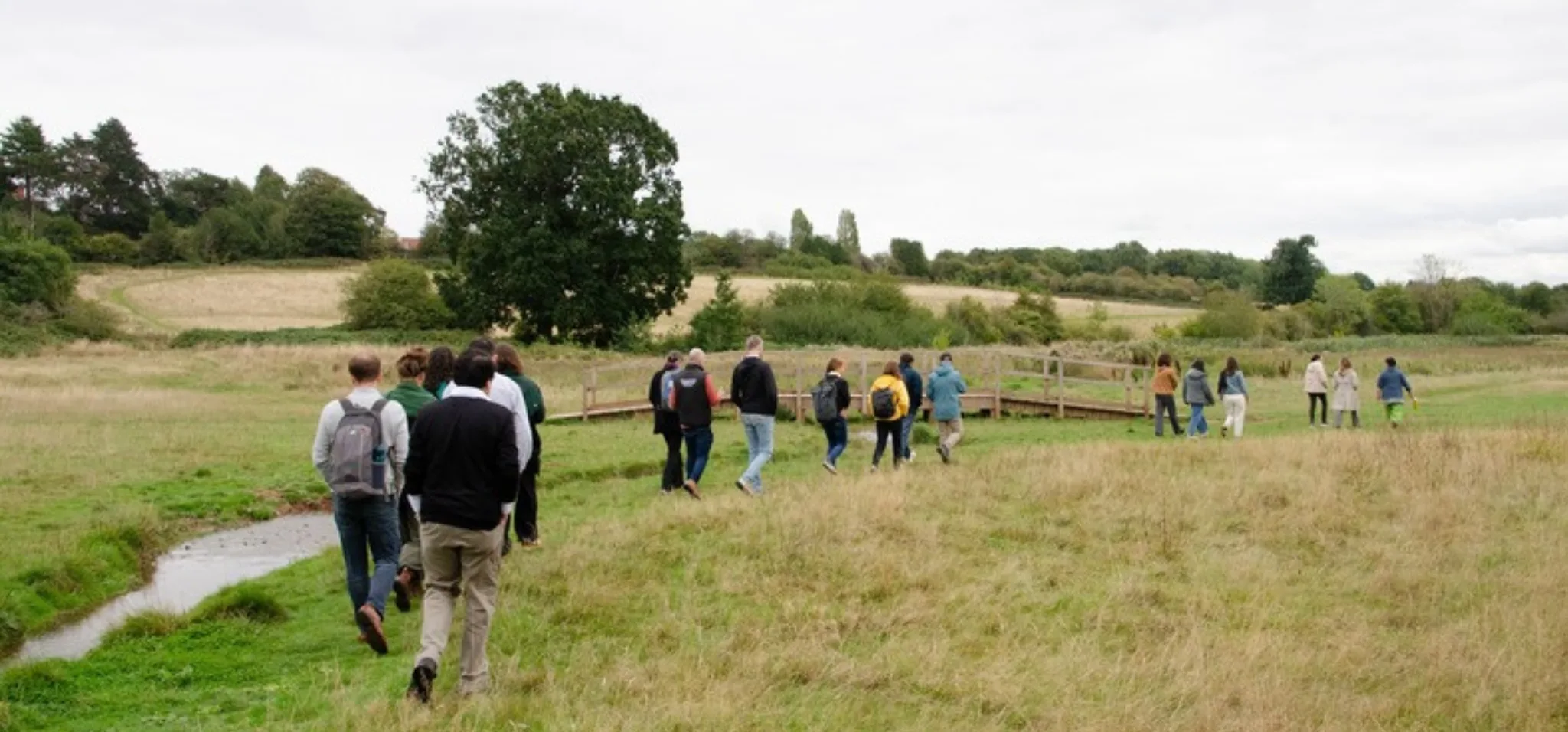
SPARK4B+ starts by mapping alternative paradigms and builds the tools to test them: participatory visioning methods linked with biodiversity, climate and economic models so trade-offs become visible. Those tools are then applied in six places, across seven sectors: agriculture, forestry, water, finance, health, education and urban development. In Hohenlohe, Germany, farmers coordinating flower strips and grassland management across farm boundaries rather than field by field. In Galicia, Spain, commons communities managing over a quarter of the region's land take on invasive species and monoculture. In Warwickshire, UK, blended finance for restoring the Avon catchment. In the Bogotá Highlands, Colombia, agroecological curricula and biodiversity storytelling. In Sweden, forest owners asking whether mixed stands can hold up against drought, fire and pests. And in Budapest, Hungary, under-used parks and cemeteries reimagined as spaces for mental and physical restoration.
Each site runs in two stages: a Transformation Lab where stakeholders imagine a biodiversity-positive and just future, then a Demonstration Intervention where the best idea is trialled and measured for biodiversity, climate resilience, social equity and economic value.
But a pilot that ends with the project changes nothing. So, SPARK4B+ also builds coalitions meant to outlast the project, champions who carry practices into their own institutions, policy level integration, and communication that reaches past the usual audiences.
What Comes Out of It
Nearly everything SPARK4B+ creates is designed to live beyond the project itself. SPARKBOX will collect the qualitative methods, from visioning and systems mapping to storytelling and arts-based practice. SPARKSPACE will be a web interface where users select an area, run the models and read the results without needing a modelling background. And an AI and VR toolbox will let people explore, test and even experience biodiversity-positive (and negative) futures before putting them into practice.
More than 50 methods, and as many documented real-world cases, will give cities, regions, catchments and ecosystem partnerships a practical starting point, showing that alternative pathways are not just possible, but already working in communities around the world. Findings reach decision-makers through policy briefs, a synthesis report and at policy events; and through documentaries, exhibitions, online courses and work with artists.
A Multidisciplinary International Consortium
SPARK4B+ is coordinated by Coventry University through its Centre for Agroecology, Water and Resilience (CAWR) and co-coordinated by GreenFormation (Hungary). The wider consortium brings together universities, research institutes, SMEs, civil-society organisations and policy actors from across Europe and Colombia. The project is further supported by an Advisory and Influencers Board, connecting perspectives from Europe, Latin America, Africa and beyond.
What is SDSN FABLE's Role?
The FABLE Consortium will use its expertise in modeling pathways, stakeholder engagement and coordination to help future visioning for the project. It will support in advancing future-visioning methodologies, developing and refining quantitative models and tools, and co-creating alternative scenarios and pathways with stakeholders through Transformation Labs (T-Labs).
The FABLE Calculator methodology will be applied and developed, coupled with the Agence Française de Développement's modelling tool GEMMES and other relevant existing modelling approaches. FABLE will support adaptation, development and linkages of existing models in country case studies (Sweden and Colombia in particular).
FABLE will also help in translating future scenarios created in T-Labs into visual and experiential representations of alternative futures through immersive experiences. This will be an important tool for testing, exploring and imagining the futures we want to see. Alongside modelling and visioning, FABLE will play a key role in ensuring the science-policy-action connection, ensuring cross-case knowledge and the upscale of results to the policy level, in the EU and beyond.