Authors: Ankit Saha (IIMA, HU), Vartika Singh (IFPRI), and Ranjan Ghosh (IIMA)
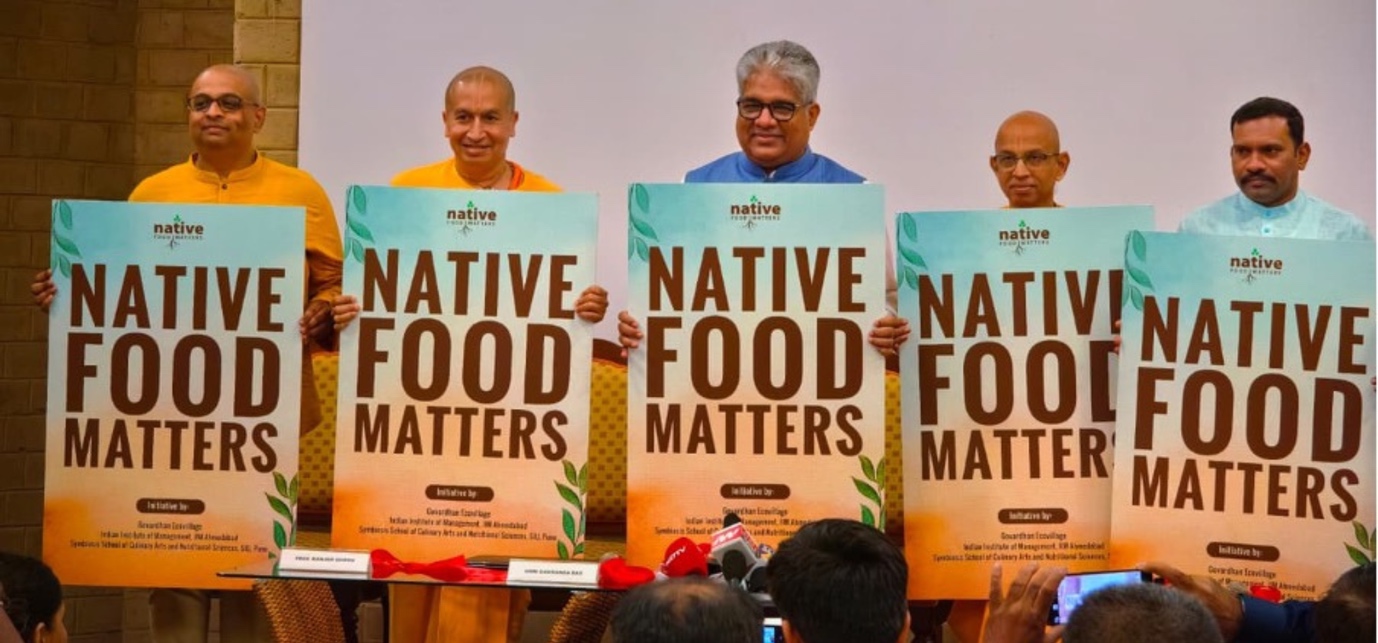
As international scientific discourse and policy frameworks increasingly emphasize integrated food systems approaches, India is advancing efforts to mainstream its traditional dietary practices and food heritage within contemporary nutritional paradigms. With intensification of climate risks and poor public health outcomes, policymakers, researchers, and civil society are increasingly converging on a powerful idea: the future of sustainable food lies in our past. This vision takes centre stage through the “Native Food Matters” initiative. The campaign developed by ISKCON, was piloted in Palghar and is envisioned to scale across regions as the initiative matures.
A Moment of National Significance
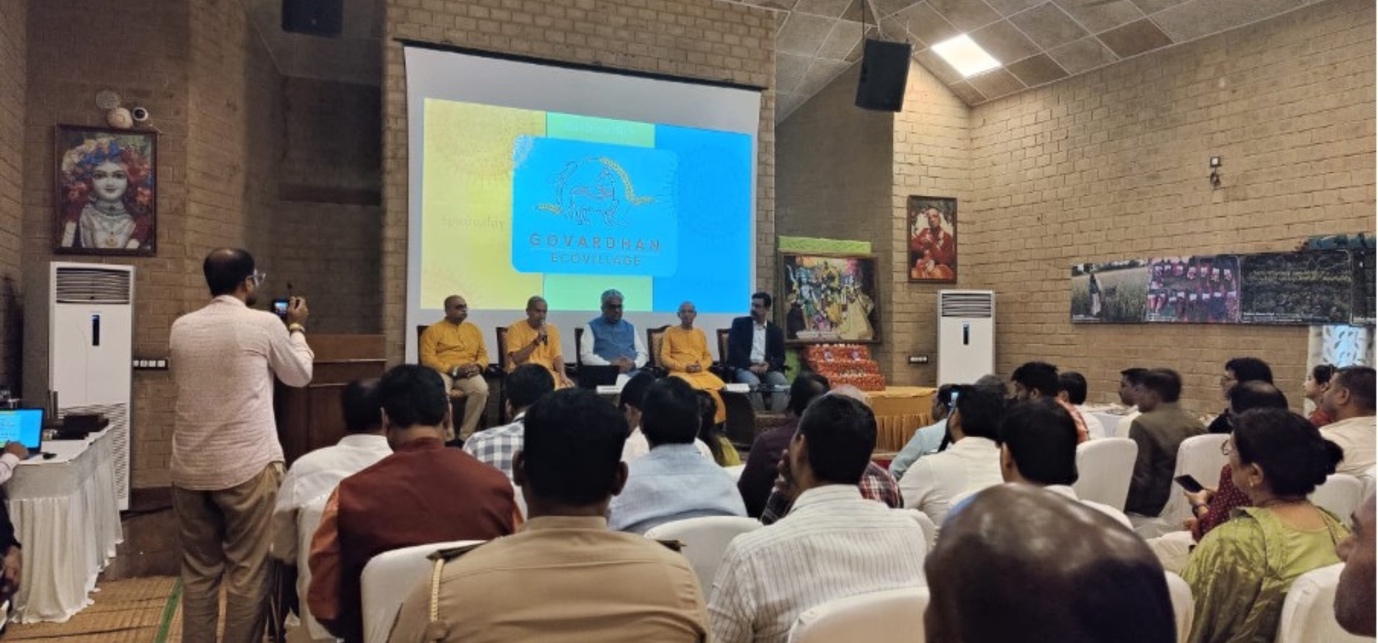
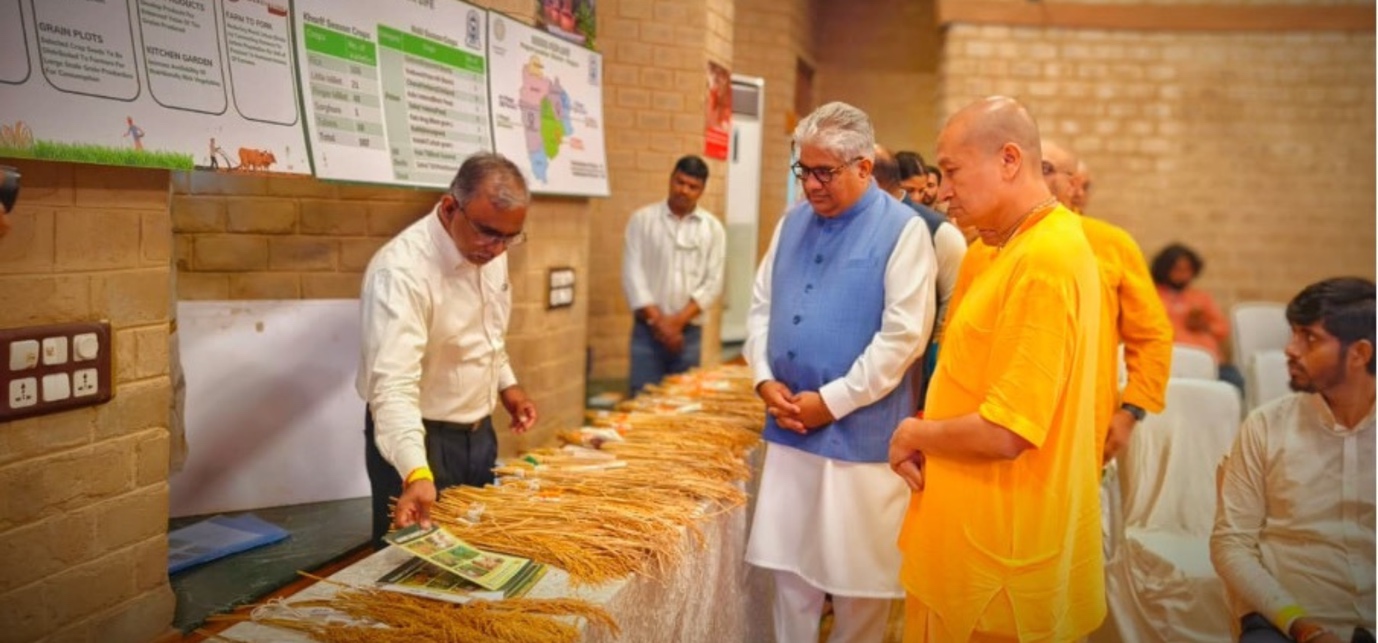
The formal launch ofNative Food Matters on 23rd September, 2025, was held at Govardhan Ecovillage (GEV), Palghar, and was inaugurated by the Honourable Minister of Environment, Forestry and Climate Change (Government of India), Minister Shri Bhupender Yadav, and anchored by leading experts working at the intersection of food systems, sustainability, and culture.
The gathering brought together policy leaders, academic experts, and grassroots proponents of indigenous food traditions. Guided by GEV’s Eight Aspects of Sustainability and the expertise of speakers like HG Gauranga Das (Director, GEV), Dr. Atul Gokhale (Symbiosis School of Culinary Arts & Nutritional Sciences), and Dr. Ranjan Ghosh (IIM Ahmedabad and FABLE India), the event framed native foods not merely as cultural artefacts but as strategic assets for shaping India’s food-secure and climate-resilient future.
The launch underlined the government’s growing emphasis on sustainable diets, biodiversity conservation, and indigenous knowledge. Speaking at the event, Minister Shri Bhupender Yadav highlighted how India's vast diversity of crops, cuisines, and agro-ecological systems positions the nation to lead global conversations on sustainable consumption.
His message was clear: reviving native foods is not nostalgia - it is strategic climate action.
This aligns strongly with India’s commitments under its Nationally Determined Contributions (NDCs) and with ongoing efforts to strengthen climate-resilient agriculture, reduce dependence on resource-intensive crops, and promote healthier dietary patterns.
Policy Perspectives on Native Foods
Dr. Ranjan Ghosh from the FABLE India team provided a rigorous policy lens on how dietary transitions can shape India’s transformation of its food system. His talk drew on a validated food-economy-environment modelling framework borne out of the FABLE Calculator (FABLE-C) and Model of Agricultural Production and its Impact on the Environment (MAgPIE). The study compared the impacts of globally promoted dietary norms (such as the EAT-Lancet diet) with India’s own National Institute of Nutrition (NIN) guidelines, which are rooted in local food cultures and nutritional realities.
Key insights:
Regional diets outperform global templates for multiple sustainability parameters.
Adoption of NIN diets could reduce domestic cereal production by 36%, easing pressure on water-intensive crops.
This dietary shift leads to a reduction of food commodity prices by up to 24% by 2050, improving affordability.
Methane emissions fall by 36% and nitrous oxide by 35%, significantly higher than reductions under the EAT-Lancet diet.
Water withdrawals decline under both dietary scenarios due to lower reliance on cereals and livestock.
These findings underscore a critical policy message: regional inclusivity must be central to food systems planning. India’s diversity in agro-climatic zones, culinary traditions, and local crop varieties makes a one-size-fits-all global dietary recommendation both impractical and suboptimal. In Prof. Ghosh’s analysis, diets aligned with India’s own food cultures, many of which are rooted in native grains, legumes, tubers, and traditional preparations, can unlock environmental benefits while enhancing food security and lowering costs.
Why Native Foods Must Enter the Policy Mainstream
The initiative highlights three urgent policy imperatives:
1. Integrating Native Foods into Climate and Nutrition Strategies
Native crops such as millets, indigenous pulses, leafy greens, tubers, and local fruits are naturally climate-resilient, nutrient-dense, and often require fewer external inputs. They directly support India’s climate goals while improving community health.
2. Strengthening Local Food Economies
Promoting native foods supports smallholder farmers, indigenous communities, and traditional supply chains. As Prof. Ghosh’s modelling shows, shifting consumer demand towards these foods stabilizes agricultural markets and reduces price volatility.
3. Enhancing Global Leadership through Regional Models
India’s experience demonstrates that sustainable dietary pathways must reflect cultural and ecological realities. By anchoring food policy in native traditions and local scientific evidence, India can offer a more nuanced alternative to global diet narratives.
A Collective Call to Action
With the Native Food Matters initiative, India signals its commitment to a food system that is climate-conscious, locally rooted, scientifically informed, and socially inclusive. The involvement of the Hon’ble Minister and leading academics marks an important moment of convergence between research, practice, and policy. As India navigates the twin challenges of climate change and nutrition security, native foods present a rare opportunity where heritage and sustainability reinforce each other.
The message emerging from Palghar is unmistakably strong: India’s path to sustainable diets and resilient food systems lies in embracing what is uniquely its own.
Read more here: News on Air (GoI) | Deccan Chronicle Article