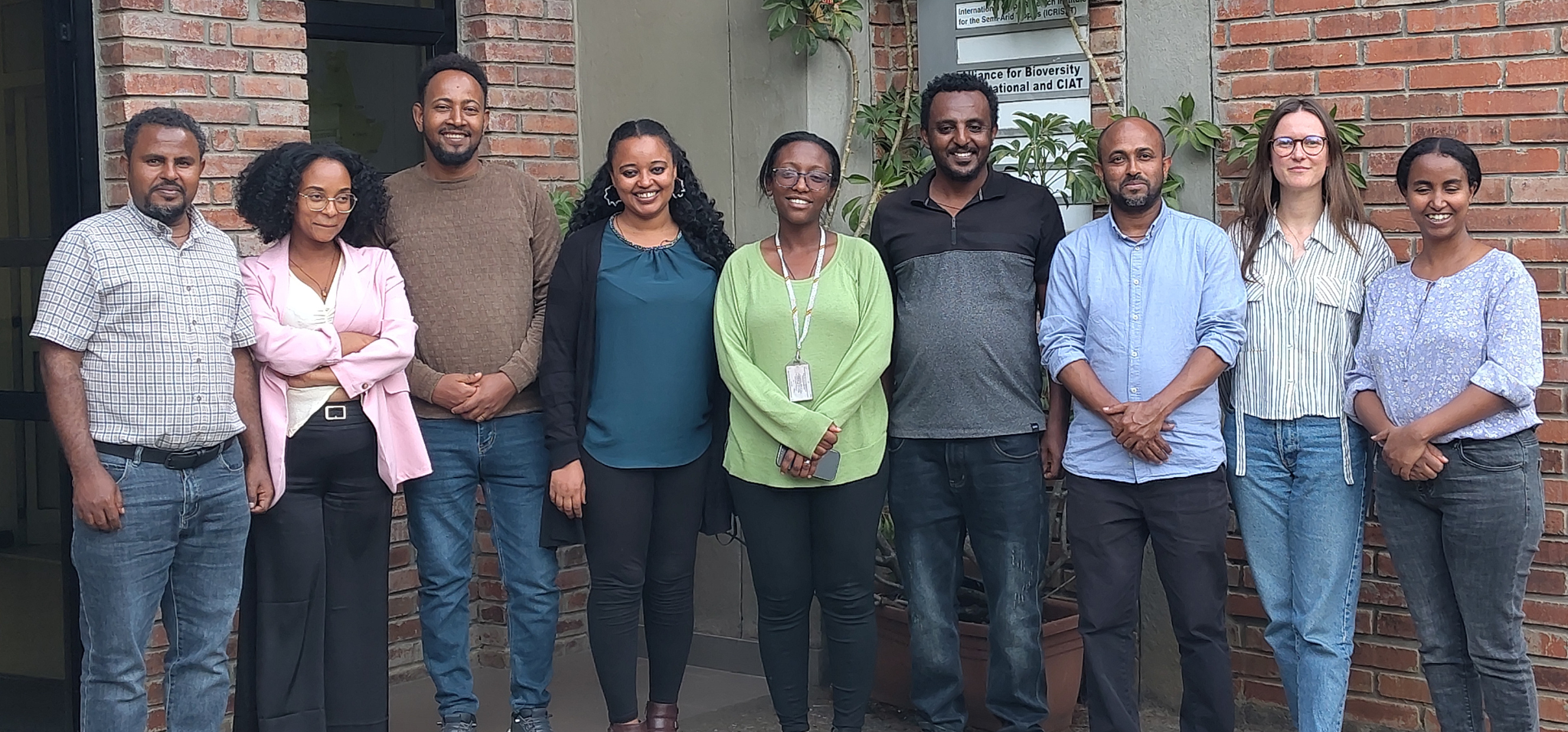
Authors: Charlotte Chemarin, Kalkidan Mulatu and Yonas Getaneh (Alliance Bioversity International - CIAT).
The Food, Agriculture, Biodiversity, Land-Use, and Energy (FABLE) Consortium is a global network of researchers who develop national food and land-use pathways consistent with global sustainability objectives. Several researchers from the Alliance of Bioversity and CIAT (Fabrice DeClerck, Sarah K. Jones and Charlotte Chemarin) are members of the FABLE Secretariat, the body that provides consortium members with modelling and policy engagement support. Additionally, some country teams, such as Ethiopia and India, rely on CGIAR forces to develop national pathways for sustainable food and land-use systems aligning with national priorities and policies. In particular, the Ethiopian team is co-led by the Alliance of Bioversity and CIAT with Lulseged Tamene, Wuletawu Abera, Yonas Getaneh, Kalkidan Mulatu, and Yodit Balcha Hailemariam, as well as Policy Studies Institute experts.
The FABLE-C is an open-source Excel-based model developed by the FABLE Consortium to develop long-term integrated pathways, supporting decision-making, prioritization, and facilitating cross-sectoral dialogues to build a common vision for sustainable food and land-use systems. The tool provides insights by modeling 88 agricultural products across crops and livestock; land and water use for food production from 2000 to 2050; trade, losses, waste, cost and environmental constraints.
Content
The objective of the capacity-sharing session was to ensure the FABLE country team gained the technical skills needed to efficiently model the FABLE-C National pathway for Ethiopia. This was achieved by collaboratively calibrating the FABLE-C with national input data and creating new features and scenario dimensions to represent national policies and priorities. In particular, the team worked on finalizing the calibration of greenhouse gas (GHG) emissions of the AFOLU sector in the FABLE-C, aligning estimates with national inventories. This calibration ensures that future GHG projections from FABLE-C are accurately grounded in historical emission trends and national specificities. It is essential for government buy-in and interest in the FABLE-C National Scenario.
Training sessions were also dedicated to modelling key components of the Ethiopian food and land-use system such as the composition of the current and projected diet, deforestation and afforestation rates, and post-harvest losses. The team reviewed the baseline data in the FABLE-C to ensure consistency with national estimates and defined targets for 2030 and 2050 based on national policies. The work includes careful compilation of national documents and data, highlighting also the existence of data gaps in national statistics publicly available.
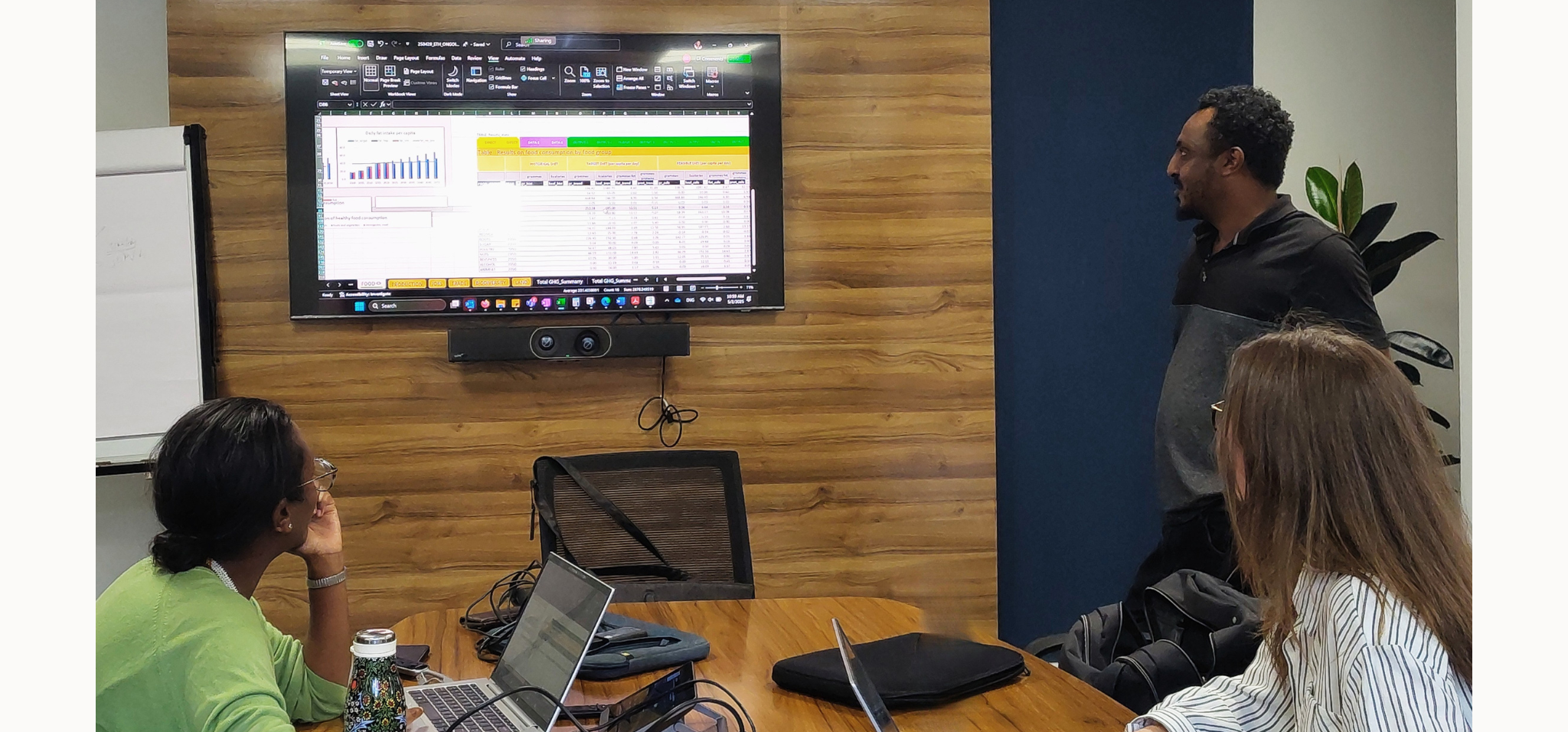
The capacity-sharing program was fully interactive. Being together in person genuinely facilitated exchanges of knowledge compared to online sessions. Hands-on exercises provided a thorough understanding of FABLE-C's formulas and structure. They helped the Ethiopian country team gaining in confidence and autonomy. Particular attention was put to solving problems such as formula errors and identifying drivers of the results. The team also learnt how to add new scenario dimensions to FABLE-C pathways.
This week also brought an opportunity for the team to hold an in-person meeting with colleagues from Policy Studies Institute (PSI), a government policy research think-tank established in 2018 that co-led the FABLE country team in Ethiopia. The team also set up a presentation session to colleagues within the Alliance of Bioversity and CIAT to present activities of the FABLE consortium and the Ethiopian country team. They promoted collaboration and the usability of the modelling tool across projects related to the food-environment-biodiversity nexus.
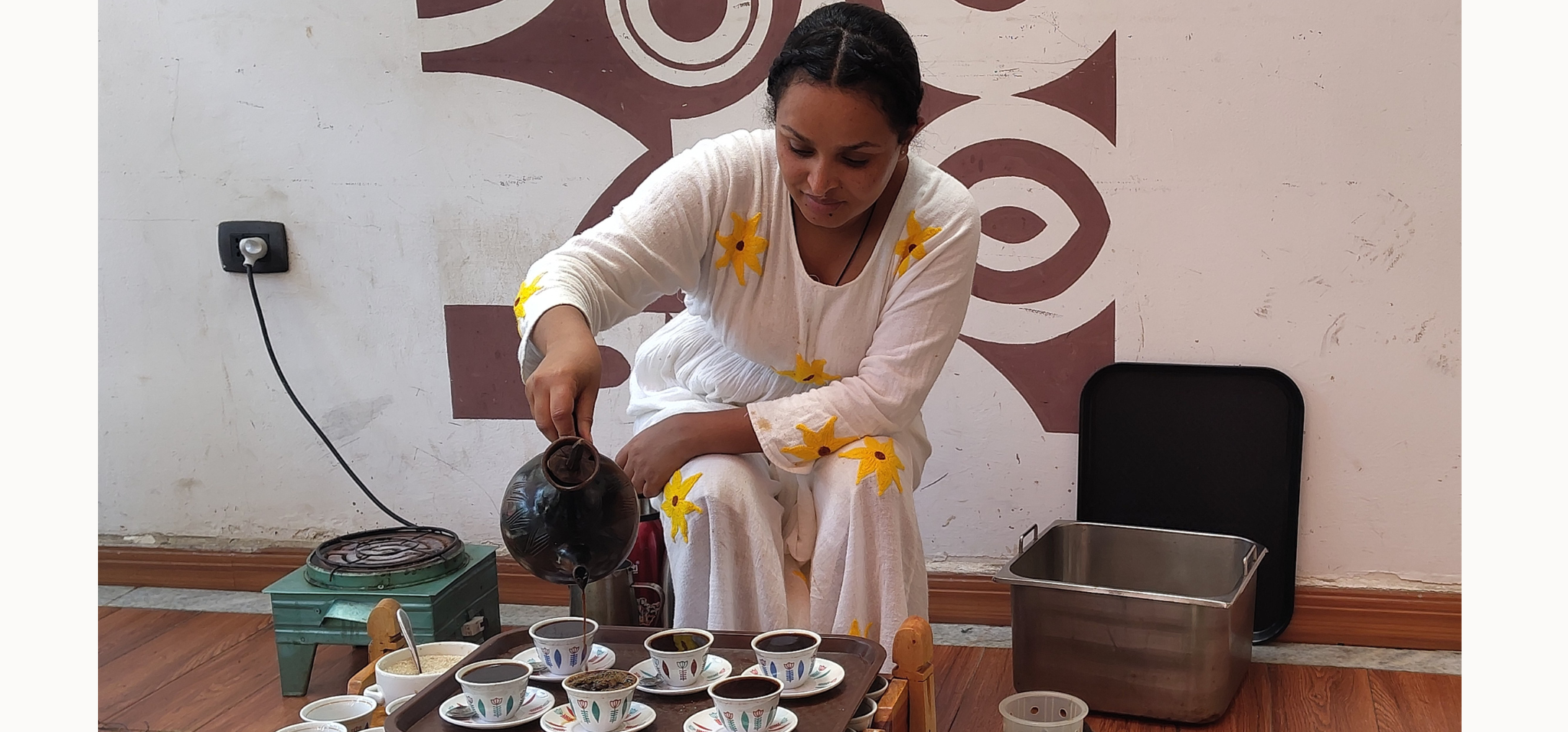
Finally, the knowledge exchange program was a success as it has enabled an opportunity for an in-depth technical and cultural exchange between the Ethiopian country team and the FABLE Secretariat. Charlotte had the chance to discover Ethiopian traditions, learn more about the history, food and socio-political context of the country, taste traditional Ethiopian coffee and experience the warm and welcoming spirit of her Ethiopian colleagues.
The advanced training strengthened modelling skills of the team. This technical expertise will also benefit important FABLE projects in Ethiopia, such as the contribution to Ethiopia's Nationally Determined Contribution (NDC) to the UNFCCC, in collaboration with the World Resources Institute (WRI) and the NDC Partnership.