Authors: Ximena Villagrán de León (UVG), Lilia Elena García (UVG), Charlotte Chemarin (Alliance BI-CIAT), and Sarah K. Jones (Alliance BI-CIAT).
Prioritizing actions in Guatemala
In 2023, FAO launched the FAO Global Roadmap, a framework identifying 120 high-impact actions to transform agrifood systems sustainably and achieve global food targets under SDG2, while keeping global warming below 1.5°C as set by the Paris Agreement. The framework is aimed at creating synergies between food and climate agendas, grounded in the notion that food security and nutrition is an essential human right that cannot be achieved sustainably without climate action. It encourages countries to break silos across concepts, actors and sectors to work on clean energy, livestock, enabling healthy diets for all, fisheries and aquaculture, crop, soil and water, food loss and waste and forest and wetlands based on two enabler components: data and inclusive policies.
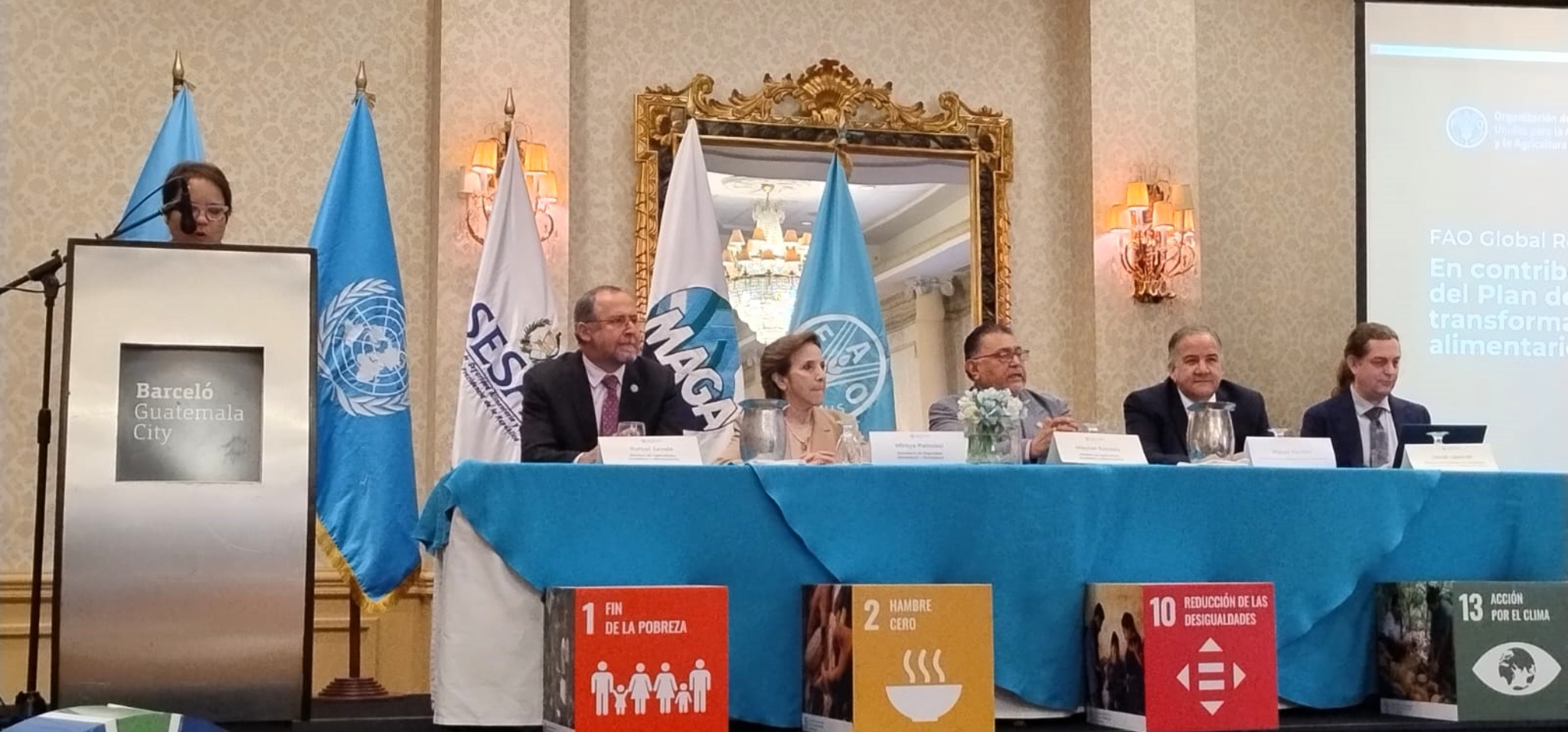
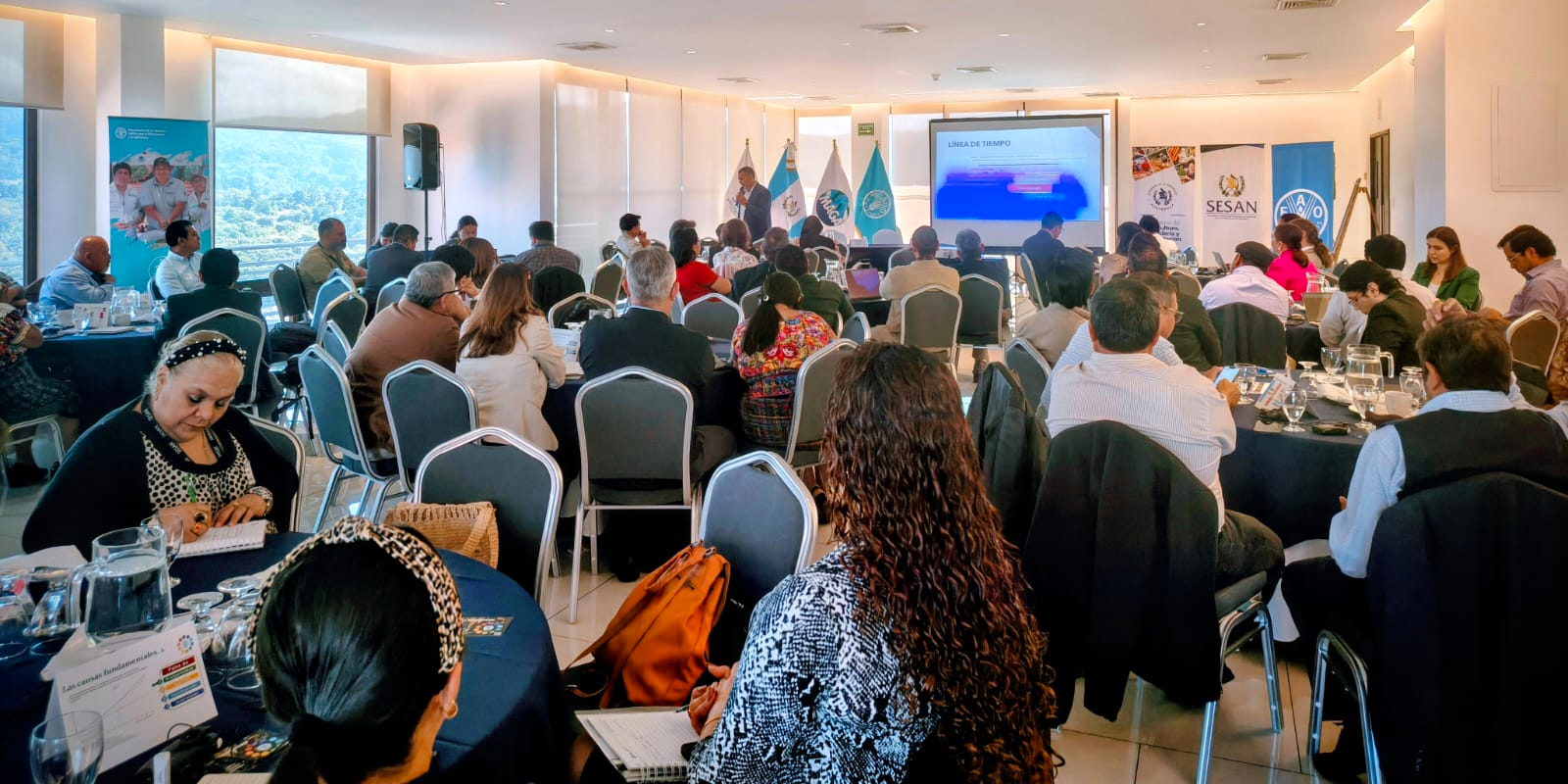
The Sustainable Economic Observatory at Universidad Del Valle de Guatemala (UVG) collaborated with the FABLE Secretariat to explore which of the FAO Global Roadmap actions could be applied in the Guatemalan context, and to model the outcomes to 2050 of implementing these actions. The team started by identifying existing national policy commitments aligned with each of the 120 actions and assessing the feasibility of modelling these using the FABLE Calculator. Alongside this, stakeholders from policy, civil society and research convened twice this year, on 17-18 March to discuss policy priorities among the FAO Global Roadmap actions, and on 25-26 November to review the first illustrative modeled pathway and identify refinements for subsequent modeling.
Modelling the actions
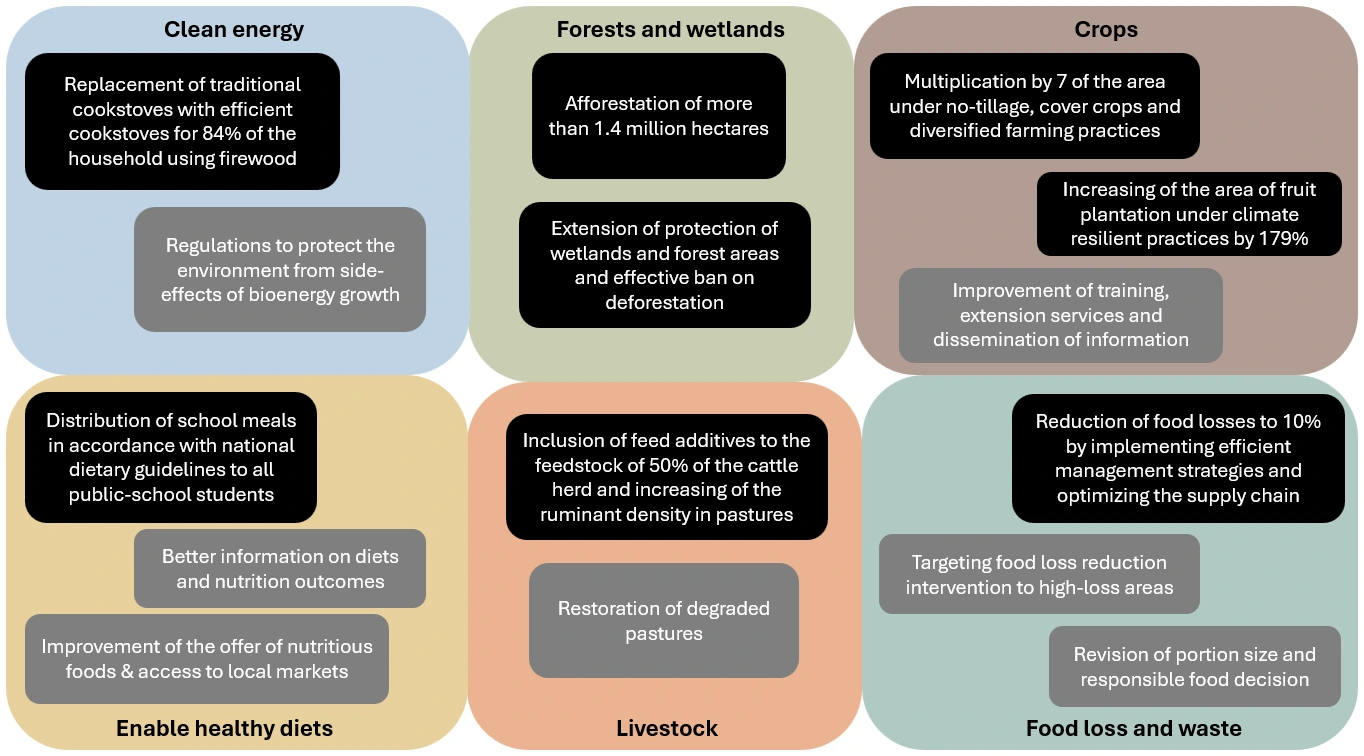
Of the 120 actions listed in the FAO Global Roadmap, 15 were prioritized by stakeholders during the first workshop based on a pre-selection of commitments from policy documents led by UVG. 8 of these were feasible for inclusion in the modelling exercise using the FABLE Calculator. Others were not due to missing data or quantified targets. The prioritized actions relate to clean energy, crops, forest and wetlands, livestock and enabling healthy diets for all domains of the FAO Global Roadmap (Figure 1). Several workstreams ensued to improve the capacity of the FABLE Calculator and parameterize it for use in the Guatemala context.
First, significant effort was put into collating national data on land use transitions, agricultural production (e.g. herd size, manure applications, yields), diets, and food loss and waste between 2000 and 2020. While timeseries data were available from the Ministry of Environment and Natural Resources (Ministerio de Ambiente y Recursos Naturales de Guatemala - MARN) on land use, data gaps limited the use of timeseries for other components. Gaps in data included, for example, the lack of detailed surveys or estimates of daily food intake per person and food waste and losses per food category in the country. Of note, we identified national data on historical and projected yields for the 9 main crops of Guatemala representing more than 80% of the cropland area.
Second, the team collated data on emission factors associated with agricultural activities used in official GHG emissions inventory of the country. Emission factors are the estimated amount of GHG released per unit per year and form the backbone of national AFOLU GHG emission estimates. Emission factors from the BUR (2018) were used as well as expert consultations with MARN officials for crop residue, livestock, manure, and rice cultivation.
Third, we compiled estimates on the existing and targeted change in the agrifood system under each action and integrated these into the FABLE Calculator. This included the introduction of new scenarios to enable the actions to be collectively modelled in a way that maintained coherence with the underlying assumptions as far as possible. New developments included representing GHG emissions from forest degradation due to fuel wood, and effects of changing livestock feed composition on livestock emissions. New scenarios included, among others, protected area expansion in specific ecoregions (e.g. to protect densely forested areas), and the adoption of more efficient fuelwood cooking stoves.
An illustrative pathway to reconcile food and climate agendas in Guatemala
Modelled results from the FABLE calculator show that implementation of the 8 selected actions would substantially improve food and climate outcomes for Guatemala over the next three decades. These actions would reduce net GHG emissions from 36.5 Mt CO2eq to -2.2 Mt CO2eq between 2020 and 2050. These emission reductions are driven mainly by reduced deforestation, 1 Mha of tree planting helping restore forest cover, and increased use of diversified and climate-smart farming practices to increase sequestration in soil organic carbon (SOC).
The illustrative pathway importantly identifies potential trade-offs and synergies between national commitments and sectors of the agrifood system. For instance, banning deforestation might cause a shortage of fuelwood or increase forest degradation (e.g. partial cuttings over more extensive areas) unless timber plantation value chains are scaled up or fuelwood consumption is drastically reduced. These trade-offs need to be carefully identified and managed.
Reflections on using the FABLE Calculator for modelling an illustrative national agrifood system future
The experience of using the FABLE Calculator, a new tool for UVG, and developing an illustrative pathway to reconcile food and climate agendas was challenging in the context of a short project timeframe. It required gaining in-depth understanding of a wide range of policies, strategies and datasets, integrating climate actions across domains in a cohesive way, and bilateral consultations with multiple, cross-sector stakeholders (agriculture, livestock, forestry, and conservation, among others) to confirm technical details. For UVG, learning to use the FABLE Calculator while actively contributing to improving it to meet the project objectives, was a challenge. While regular online training was provided by the FABLE Secretariat, having a longer project timeframe and organizing in-person work sessions would have facilitated the process.
For several of the actions prioritized by stakeholders, no data were available on historical trends or the magnitude of change that is anticipated or desired, hindering modelling efforts. For example, no quantifiable policy commitment was identified related to protecting the environment from side effects of bioenergy growth or improve the targeting of interventions to reduce food loss. These actions were therefore not modelled but may make important contributions to future food and climate outcomes.
Next steps
At the second FAO-organized stakeholder workshop in November 2025, the modelled results of the illustrative national agrifood system pathway were shared with local stakeholders for discussion purposes. These results are being used to inform national dialogues on the future of the agrifood system in Guatemala.
This project showed the benefits of using a participatory, systems approach to model an illustrative national food and land use system pathway. While we explored a single agrifood system pathway based on existing Guatemalan policy documents, it would be beneficial in future work to consider how a range of scenarios and uncertainties in input data affect food, climate and other outcomes. Such work could also seek to model a broader range of actions that are potentially relevant for Guatemala.