Author: Fanny Vincent (INRAE, FABLE France). For reference, see other blogs.
A Territory Shaped by Livestock Farming
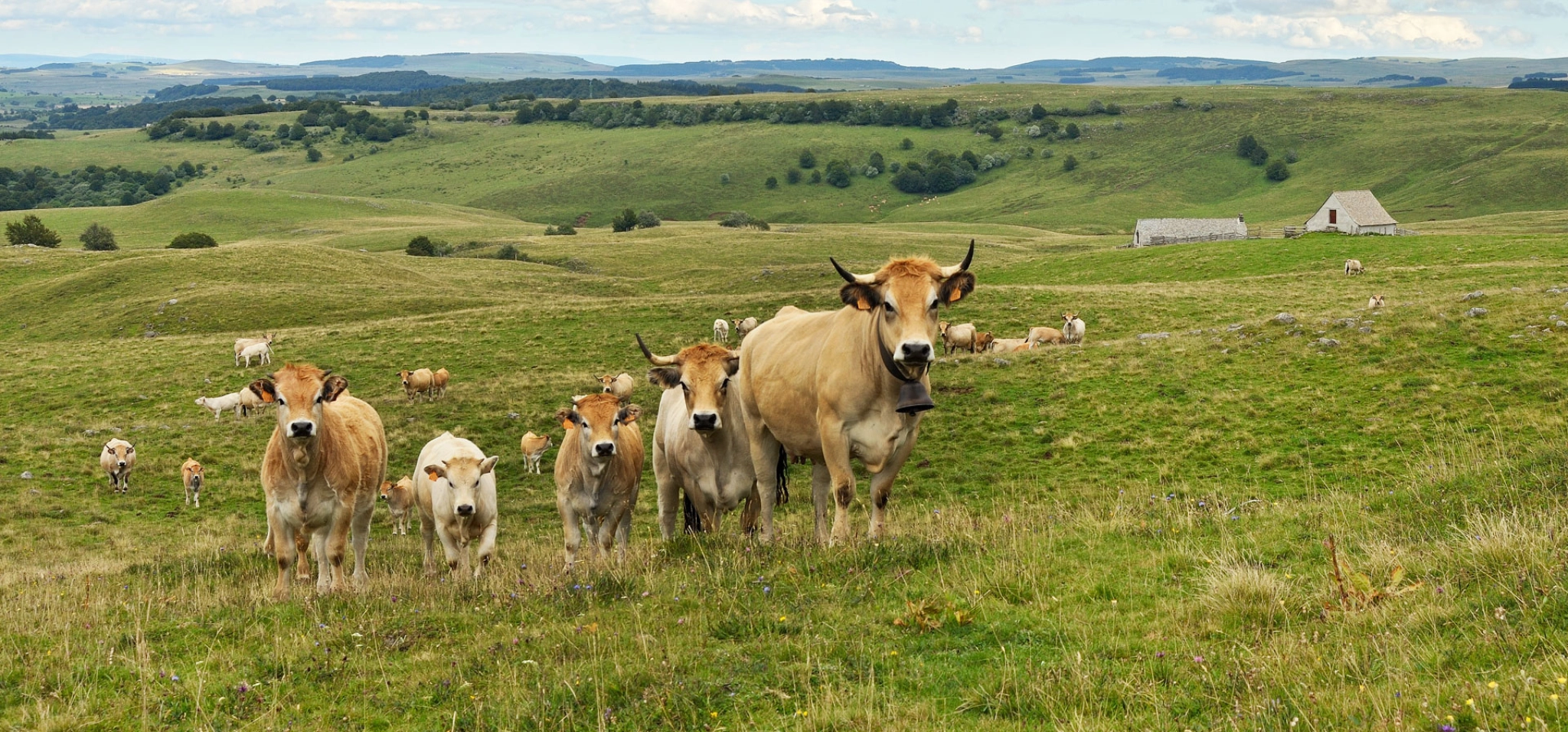
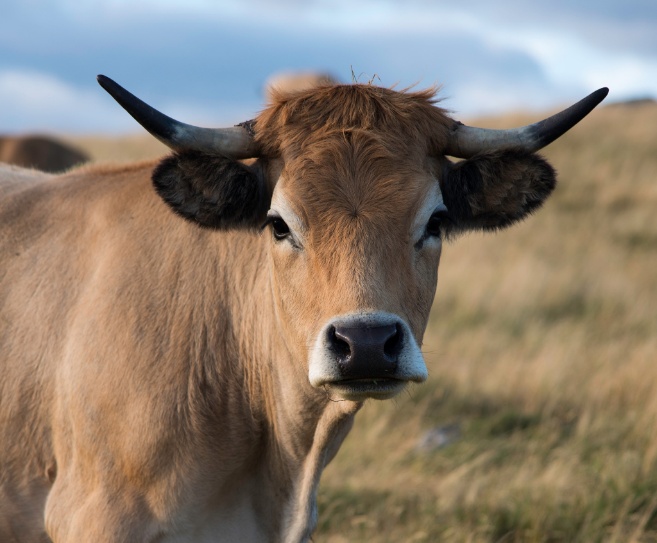
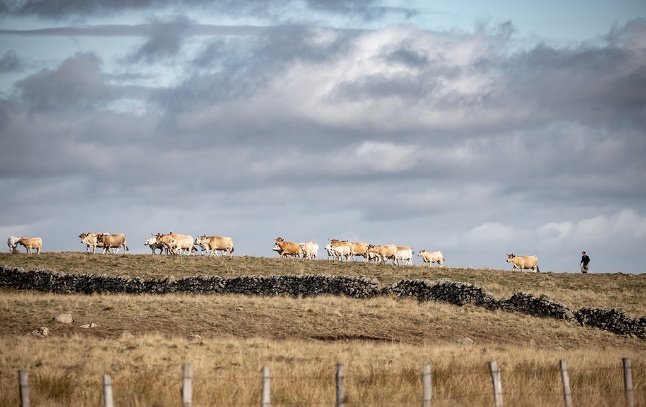
This is the story of Aubrac, an isolated high plateau in south-central France, whose economy, landscapes, and identity are closely linked to livestock farming. Beef production dominates, alongside a dairy sector structured around the production of Laguiole AOP cheese and a famous dish called Aligot. Livestock farming supports local employment, agri-food activities, tourism, and the international reputation of the Aubrac cattle breed.However, the territory faces several challenges. Climate change is increasing pressure through more frequent droughts, water shortages, forage variability, and animal health risks.
At the same time, broader socio-economic changes are affecting farm viability, including increasing price volatility, evolving consumer preferences, uncertainty in agricultural and environmental policies, rising production costs, and shifting market conditions that challenge the long-term sustainability of livestock farming systems.
A Research Partnership for Long-Term Adaptation
SOLVE is an international transdisciplinary project funded by the French National Research Agency (ANR) and the Belmont Forum. Over three years, SOLVE will co-develop local adaptation roadmaps with societal partners to build resilient, healthy, equitable, and prosperous food and land systems in nine countries: Argentina, Colombia, Ethiopia, France, India, Mexico, Nepal, Norway, and Türkiye.
INRAE, co-lead of FABLE France, is leading case studies in Aubrac, Brittany, and Roquefort areas, which represent contrasting agricultural and climatic contexts for livestock farming. In Aubrac, the team is collaborating with the local Regional Park, PNR Aubrac. In France, a PNR is a regional governance body whose mandate is to balance economic and social development with the preservation and valorisation of natural, cultural, and landscape heritage. The PNR Aubrac has been actively engaged in programmes on climate change adaptation and on the local food system, making it a natural partner for research aimed at building long-term adaptation strategies for the livestock sector.
As Stéphanie Ingels, local food systems officer at the Park, explains: “This work is in line with two of our action programmes — one on territorial adaptation to climate change, and one on the Aubrac food project. We were fortunate to join a broader research project led by INRAE aimed at exploring adaptation pathways for livestock farming in the face of climatic and socio-economic change.”
The first stakeholder workshop took place on March 4th, 2026, to collectively assess the territory’s vulnerability.
La Grange®: A Participatory Foresight Tool
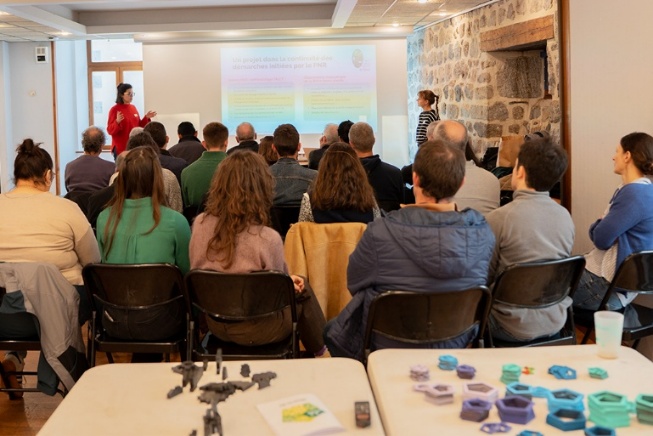
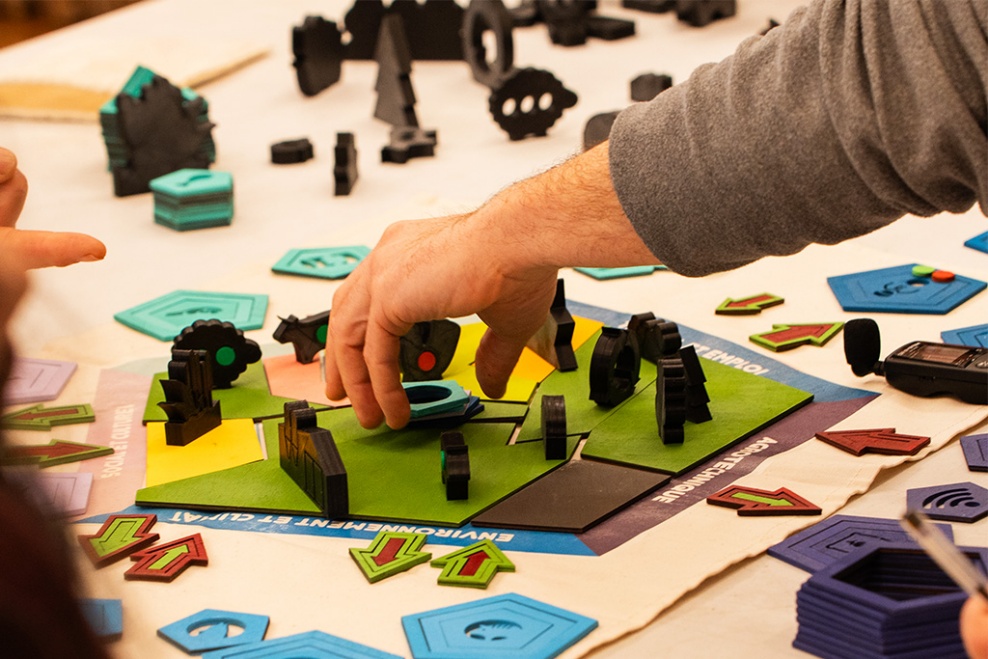
The workshop brought together around 30 stakeholders, including farmers, cooperatives, agri-food businesses, local authorities, and researchers. Discussions were structured through La Grange® (“The Barn” in French), a serious game developed by INRAE.
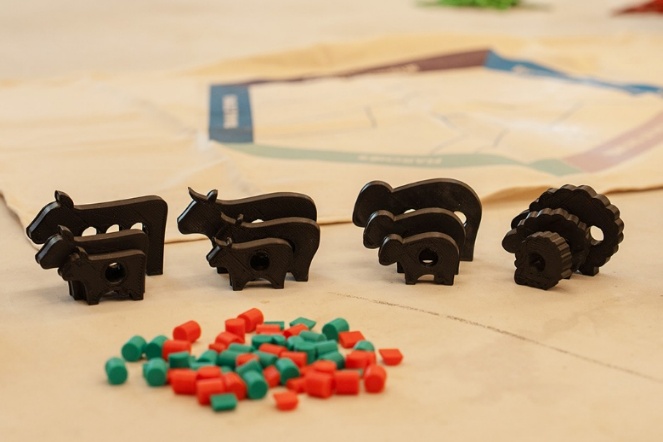
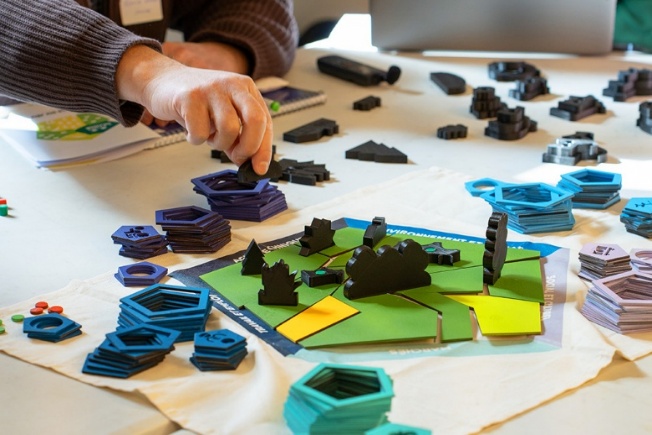
La Grange® was designed as a participatory tool for shared prospective thinking about livestock farming systems in real or fictitious territories. It draws on scientific frameworks for socio-ecological systems and represents livestock farming at the intersection of ecological, economic, technical, and socio-cultural systems.
By using physical game pieces to represent land use, animal species, markets, employment, and environmental interactions, it enables stakeholders to externalize and confront their representations of a shared reality — a process shown in the literature to be a powerful driver of collective learning.
Compared with conventional focus group methods, the game offers several advantages. It lowers barriers to participation by creating an informal and engaging atmosphere, making complex systems visible and tangible, and helping surface disagreements and complementary perspectives that might not emerge in a standard discussion. This serious game has been used in research, education, and strategic planning processes with farming communities and students across a range of French territories.
The game was played in four parallel groups with 5-6 people at each game table. Players had to depict their vision of the current territory: land use, types of farms and their relative importance, supplied markets, farming-related employment and industries, input use, and environmental and sociocultural interactions.
Participants then imagined how the territory could evolve by 2050, under climate change and two contrasting socioeconomic scenarios:
- “A market-driven liberal scenario.”
- “An environmental transition scenario guided by sustainability policies.”
To support this forward-looking exercise, the INRAE team presented participants with territorial-scale agroclimatic projections for 2050, covering key indicators such as temperature and precipitation trends, turnout and hay-cutting dates, number of frost days, and heat stress indices. These projections served as a shared reference to ground the discussions and help participants think through the concrete implications of climate change for farming systems in Aubrac.
Participants responded positively to the exercise. “It was interesting to work together. It broadens your perspective. In the end, it feels less daunting than thinking about it alone,” said one participant.
Another participant reflected: “Discussing with people from different backgrounds and professions is very stimulating, because we don’t think about the same things, or in the same way. It was a very good exercise for projecting ourselves. It helped us lay the first foundations of a territorial strategy.”
Key Results
The mapping exercise produced a consistent picture of the territory across the four groups. On the strength side, participants highlighted the resilience of the extensive, grassland-based system, the quality food chains (Laguiole AOP, Fleur d’Aubrac PGI, Boeuf Fermier d’Aubrac Label Rouge), strong Aubrac brand recognition, rich biodiversity, high water quality, and a deeply rooted culture of cooperation.
Weaknesses included a near-monoculture production system, high dependence on live calf exports to Italy, farm succession challenges, geographical isolation, and limited essential services, such as healthcare and housing.
Participants identified growing consumer demand for high-quality and traceable products, the territory's strong reputation, and emerging agrotechnical innovations as key opportunities. Major threats included climate change, particularly droughts, water scarcity, emerging animal diseases, as well as market fragility, uncertainty surrounding the Common Agricultural Policy (CAP), and the gradual erosion of the agricultural workforce.
Next Steps
The workshop provided a shared diagnosis and an initial exploration of future pathways. Researchers are now processing the qualitative data collected across the four groups, identifying the main adaptation trajectories mentioned by participants and the underlying logic connecting territorial assets, constraints, and possible responses to climate and market pressures.
These trajectories will be refined through targeted expert interviews, which will allow the team to deepen specific dimensions — technical, economic, and institutional — and to assess their feasibility and relevance for the territory. The resulting adaptation strategies will then be brought back to stakeholders in a second workshop expected in July, where they will be discussed, challenged, and enriched. The enriched strategies will subsequently feed into a quantitative modelling phase to assess their economic, environmental, and social impacts by 2050.
Ultimately, the project aims to support the development of practical adaptation roadmaps for the Aubrac and contribute to broader international reflections on the future of livestock territories facing climate and socio-economic change. For the PNR Aubrac, the results will directly feed into its territorial climate adaptation programme and its local food strategy, providing a scientific base for future policy decisions. For farmers and the livestock sector more broadly, the project may offer new ways of thinking about the future of their production systems.
By combining stakeholder knowledge with participatory foresight and future modelling, the project seeks to help local actors navigate uncertainty and identify pathways toward a resilient livestock sector by 2050.